Lately there's been a lot of noise about CTR and its impact on SEO: some say manipulating CTR works, others that it seems to work, and others that it simply doesn't work…
For newcomers: in SEO, CTR (click-through rate) is a ratio that measures how effective a result is on Google's search results page (SERP). It's the number of times a result is clicked divided by the number of times it's shown (impressions). You can easily check this percentage in the “Search Analytics” report in Search Console (formerly Google Webmaster Tools).
When the results of an experiment can't be reproduced, it's because the experiment was badly designed or the hypothesis is wrong. So the result can't be reliably measured, or in other words, you can't accept the hypothesis you're trying to prove (in this case, whether or not CTR affects rankings). On top of that, in SEO we have the handicap of experimenting in a very volatile environment, where we can't isolate all the variables.

Misreading this series of experiments, and others that have been running for a while, has given rise to two camps:
- Those who say Google doesn't take CTR into account in its ranking algorithms.
- Those who say it does, and that it can be manipulated with bots and whatnot.
Google needs CTR
CTR, along with other user behavior metrics (very well explained by Dan Petrovic on Moz), is what Google and other search engines use to learn and improve their results (machine learning).
These metrics give search engines feedback on which results meet users' needs (at least at first glance, in the SERP). A site can be great on-page and/or have authority for whatever reason, and still not give users the answer they need.
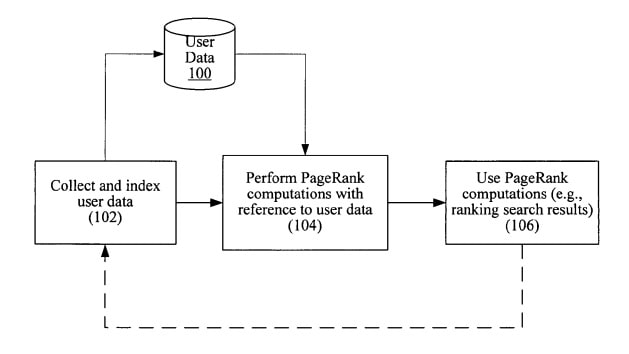
As Ricardo Baeza-Yates (Yahoo) says in the Web Retrieval chapter of his book Modern Information Retrieval (a must-read if you're an SEO), click-through data is even better than PageRank for determining the quality of a result. It's also the best metric for evaluating how effective an algorithm is when you test it. So much so that there's a Yahoo patent about replacing PageRank with this user behavior data, which cites this study by Microsoft that also proposes improvements. Google also has its own patents on click-through feedback, and here's the latest one. Even Gary Illyes (Google) confirmed at SMX Advanced in June 2015 that Google uses it as a ranking signal, but that it's sometimes noisy, so it's only used in some cases. Paul Haahr confirmed it again in 2016.
CTR manipulation in SEO
I'll tell you right now: artificially manipulating CTR for SEO is a complete waste of time, and if it ever did work, it would only be temporary and for queries with little or no competition. If you think you can manipulate a search engine like Google with “hey, search for this and click here,” “microjobs” (paying people on microtask sites) or “pandabots,” then either you're new to this or you haven't bothered to understand the algorithms behind search.
 Interesting, tell me more.
Reasons why artificially manipulating a result's CTR doesn't work
- CTR isn't binary: getting a click isn't always good, and not getting one isn't always bad. CTR is used together with other stored data, such as that query's history (time spent on the result, query abandonment, bounces back to the SERP, clicks on other results…). How it's calculated is a secret each search engine keeps, and you, “human or bot,” can't replicate this behavior.
- CTR is biased: it doesn't just depend on the result's position. The interface design (SERP layout, device used, clickbait…) can also change it, since those conditions aren't uniform. This bias is corrected by very complex algorithms that you, “human or bot,” can't extrapolate. But in the end, as of today, it's human evaluators who get to decide whether something is clickbait.
- CTR is noisy: As I mentioned earlier, Gary Illyes said that CTR is only used in some cases because it's noisy. You, “human or bot,” can't know for which queries Google uses it to calculate rankings and for which it doesn't.
- User profile: one of the things search engines store along with a click is the profile of the user who made it. Why? Because it's one of the ways they can personalize results for that user's future searches, or for users with a similar profile. The moment you tell a group of buddies or a private network to click on a result, you've already screwed up the experiment. So you, “human or bot,” can't manipulate it.
- Dwell time: search engines know from CTR whether a result looks interesting, but then, based on whether a user bounces back to the SERP and how they do it, they know whether that result is actually good or not (“dwell time”). This metric is key, and bouncing back to the SERP is something search engines try to fix, because it's bad for them and for users (it wastes resources and it's a sign of poor-quality results). Ask Jeeves already tried to reduce this effect back in 2004 by launching a results preview called “Binoculars”, which Google later launched too as Instant Previews (remember the preview that had a bug and doubled visits in Analytics?). Yahoo also published a patent on this in 2008. So, do you know what dwell time Google considers good for each query? Me neither, so you, “human or bot,” can't know it either.
- One URL ≠ one keyword: people don't land on a URL from just one query (right now I'm looking at a URL with more than 1,000 different entry keywords). CTR is also used as a signal at the URL level and even at the domain level. Can you simulate all of the above, and for more than one query? No, my “human or bot” friend, you can't simulate it.
- Search intent: search engines still have trouble identifying the intent behind a keyword, which is why they use serendipity and disambiguation methods. This changes the SERP and, once again, biases CTR. Also, Google may detect an intent for one of your results that isn't the one you're trying to rank for. Can you tell which intent Google assigns to one of your results? Knight Rider's Michael Knight can't, and neither can you, “human or bot.”
- Fraudulent click detection: Google has plenty of experience fighting click spam. Do you think what it applies so successfully in AdWords isn't used for organic results? If you think it isn't, then you, “human or bot,” were born yesterday.
- Machine Learning: CTR and the rest of the user metrics are used within an iterative learning process. The moment a result stops getting clicks, it's considered less relevant, and it gets demoted or not depending on the rest of the results. Once again, search engines do this because PageRank falls short at calculating a result's relevance. A URL can have a lot of authority and still not fit the current context of the search (date, device, location…). The day you manage to manipulate it, will you be able to do it every time? If so, “human or bot,” tell me who your dealer is, because I want that shit.
Ways to improve CTR naturally
Just because CTR can't be manipulated artificially doesn't mean you shouldn't improve it naturally. It would be stupid not to try, because it's a way to get more traffic, even in a world where Google didn't use it for ranking.
In January 2013, I explained part of an experiment I ran on CTR to understand why users clicked on one result and not another. From that experiment I came up with a list of natural factors that can affect this metric:
- Intent
- Brand recognition
- Keywords in the title, description and URL
- Persuasive snippets and/or snippets with a call to action
- Sitelinks
- Rich snippets (rating, breadcrumb…)
Here's an example of persuasion:
In the example in the tweet, from the moment the title was changed to add the number of items in each category of a site, the Avg. Position started to improve. Why does it work? Category pages tend to target more long-tail queries, the CTR effect is constant over time, and I'm not working on just one URL, I'm working on several pages at once. With this simple change, thousands of URLs moved from the Top 10 to the Top 5, for keywords ranging from 1K to 22K monthly searches (exact match), with a more than considerable impact on traffic. How much time and how many resources (buddies, money for microjobs, proxies, bots…) would it take to ever pull this off?
Conclusion
As I always say, don't waste time fooling search engines, invest it in understanding them. It's much more productive and rewarding to study how search engines work, because you'll start rowing with the current instead of against it.
