Starting yesterday, every user who signs in on the .com version of Google will be searching through the secure search version of the search engine (over HTTPS), or as Google calls it, Google SSL Search. They say it's to improve privacy for signed-in users, but I don't buy it, and neither does anyone else.
Since when does Google care about user privacy, when it takes pictures of everyone with Street View and puts ads inside your emails? (great point from Search News Central)
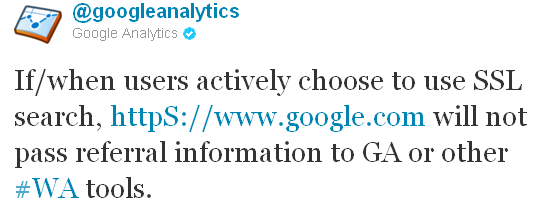
As you can see in the tweet above, from now on we won't be able to see the referrer for searches made by users signed in to Google. Which means we won't be able to know which keywords are bringing them to our site!
And that's not all: what about site owners who personalized their pages based on the query the visitor searched for? Matt Cutts's defense is that anyone doing that could be cloaking… oh well… isn't that improving the user experience you keep asking us for?
How secure search affects SEO
According to Google, this will affect less than 10% of searches, which is the percentage of users who browse while signed in to Google.
But it will only happen with organic keywords, because CPC keywords will keep showing up just like before. Their excuse for this utter nonsense is that this data is important for optimizing marketing campaigns in AdWords. Which shows, once again, how eager Google is to make life hard for SEOs. This way SEO will become more expensive and less accurate, and companies will trust SEM more. Between this and Google constantly handing out coupons to inexperienced people so they can run their first AdWords campaigns, people will be forced to raise their CPC bids on keywords. Result: Google will make even more money. Apparently the huge profits it made last quarter weren't enough…
To avoid making an even bigger mess, Google said it will keep only 1,000 keywords from the last 30 days that come from signed-in users, but they'll only be visible in Google Webmaster Tools.
Will it really only affect 10% of searches?
Hat tip to Xavier Colomés, a great analyst and a Google skeptic (he questions absolutely every number Google puts out, as he should): when I told him about the 10%, his literal reply was no way in hell. And he's absolutely right. Maybe it is 10%, but that's an average (way to go, Natzir, of course 10% is an average, but you'll see in a second why I'm saying this…)
What about sites where, for whatever reason, 30% of visitors are signed in to Google? That number isn't that crazy: Outspoken Media talks about a case with one of their clients where 30% of users are signed in. They were able to confirm it with the data their Analytics shows, or rather, the data it DOESN'T show, as we'll see below. Isn't that way too big an error?
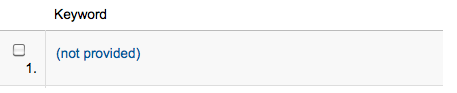
How will we now see secure search keywords in Google Analytics?
As a wonderful, fantastic “Not Provided”. And Google didn't even blink.
How can we still see the referrer and keywords?
Not all is lost, but the available fix is a patch (and a pretty expensive one) until Google decides (hopefully) to get rid of SSL Search.
When you go from an encrypted page (HTTPS) to an unencrypted one (HTTP), the referrer isn't passed, but if you go from one encrypted page to another encrypted page, the referrer is kept.
In other words, if someone clicks through from secure search to a landing page served over HTTPS, we'll be able to see the referrer.
The folks at SEO Fast Start ran this experiment and managed to get the referrer and the keywords. And depending on the type of site, say a campaign microsite (an ongoing one, not a one-off), it could be worth implementing.
What has Google said after all this?
Well, only Matt Cutts has spoken up, saying… brace yourselves, this will blow your mind:
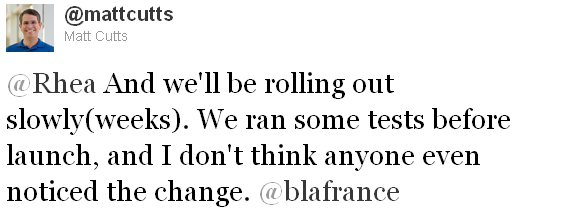
What? Nobody has noticed? People are losing data, on a massive scale as we saw earlier, and nobody has noticed? How are we supposed to justify SEO campaigns now, when keywords that used to exist and bring traffic suddenly go poof and disappear…
Plus, these guys are really clever and took the chance to launch Flow Visualization in Google Analytics to keep the web analytics crowd entertained and cool things down a bit after all the outrage.
Well, you really outdid yourselves this time, Google. “Don’t be evil”?… oh, wait!
